
Species interactions
By tracking which species co-occur through time and space, airborne DNA helps us begin to uncover how species interact within ecosystems and how these relationships change.
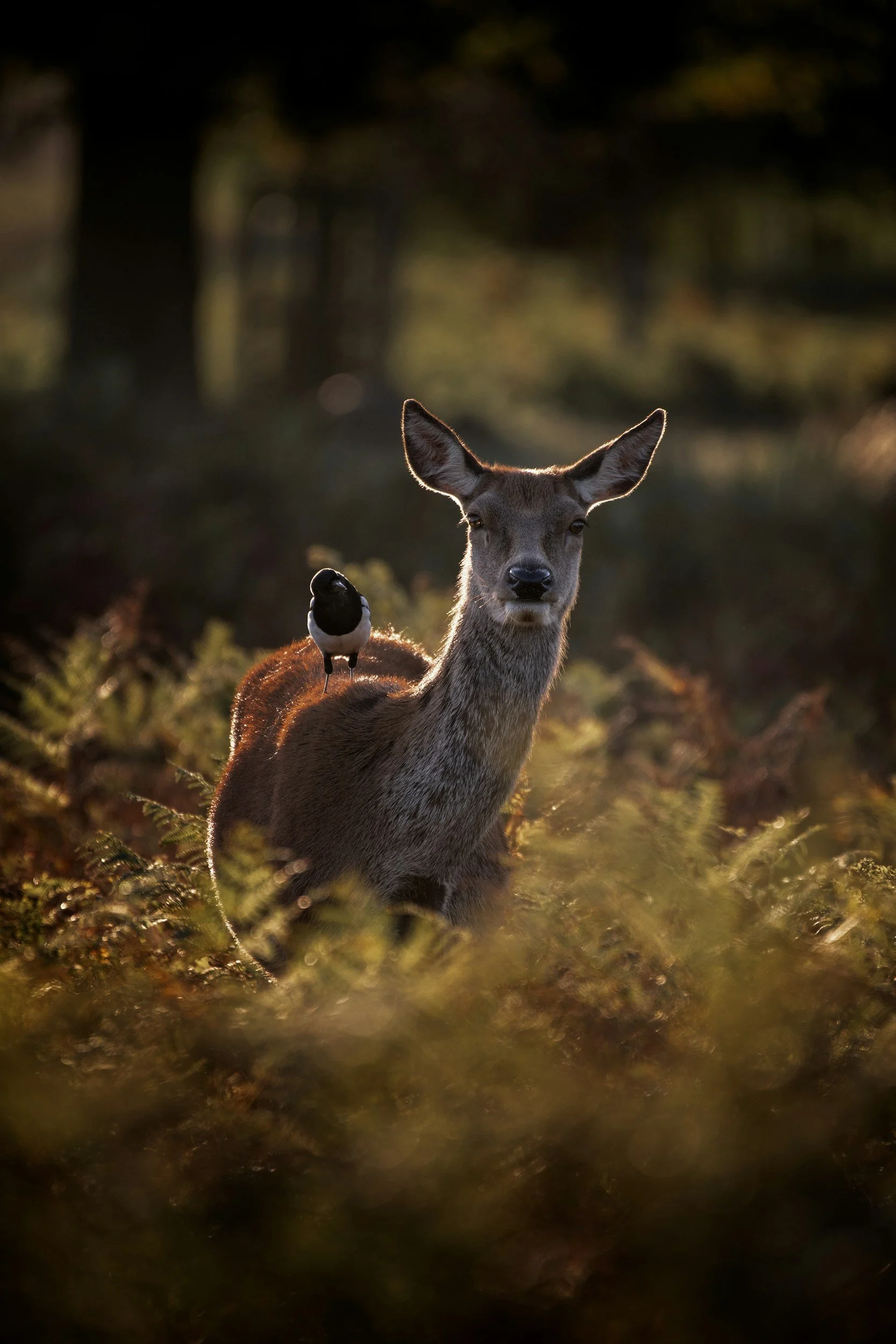
Species interactions form the structure of ecosystems. These include processes such as predation, pollination, competition, parasitism, and mutualism. However, directly observing these interactions across large spatial and temporal scales is extremely challenging.
Airborne environmental DNA provides an indirect but powerful way to explore these relationships by identifying which species occur together across time and space. When species repeatedly co-occur in the same environmental samples, it can suggest potential ecological relationships or shared environmental preferences.
By analysing these patterns across seasons and decades, we can begin to infer how interaction networks change over time. For example, shifts in climate or land use may alter which species are present in a given environment, which in turn reshapes the structure of ecological communities and their potential interactions.
Although airborne DNA does not directly observe interactions, it provides a large-scale framework for studying ecosystem structure as a network of co-occurring organisms. This allows us to move beyond species lists and begin exploring how ecosystems are organised and how that organisation changes through time.
This perspective is particularly powerful when combined with long-term datasets, where changes in co-occurrence patterns can reveal how ecological relationships respond to environmental pressures.