By Michael Hawgood
For a research team based primarily in Umeå, and other northern parts of Sweden, working on the SweBITS project often means spending our days in front of computer screens. Much of our work involves analysing a 60-year archive of environmental DNA (eDNA) collected from air filter stations across the country. Yet studying ecological data gathered more than 1,000 kilometres away can be a detached experience; numbers and graphs alone cannot fully convey the landscapes and ecosystems from which those genetic signatures originate.
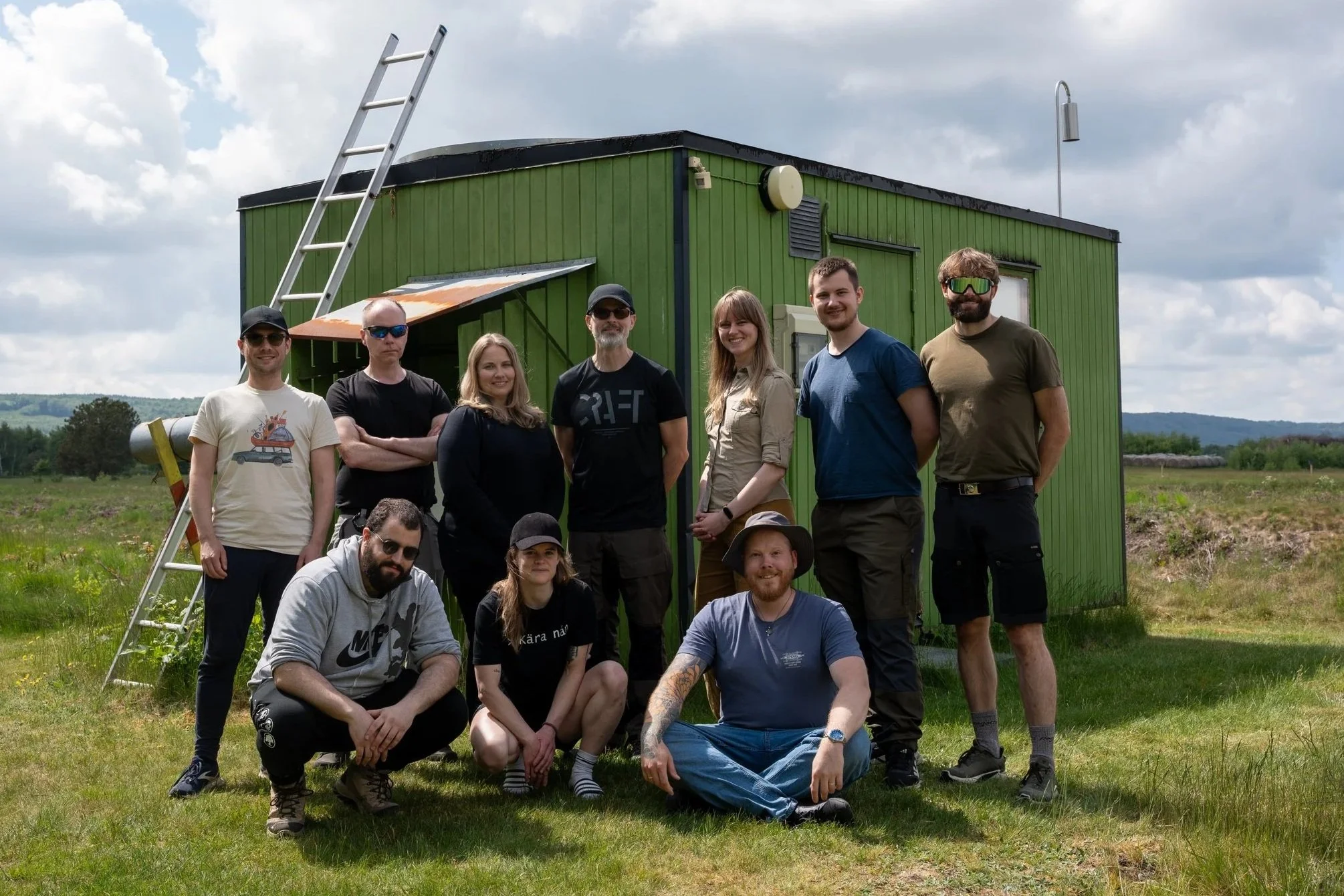
The SweBITS team at the Ljungbyhed air filter station. Photograph: Henrik Jessen.
To better understand the environments behind the data, our team travelled to Skåne to visit our southernmost air filter station in Ljungbyhed. This station is a critical node in our network, quietly capturing the biological signatures of southern Sweden's agricultural plains and broadleaf forests.
As Henrik Jessen, a postdoctoral researcher applying mathematical approaches to uncover causal relationships in the data, explained:
"It all feels very abstract if I'm sitting up north typing away on a computer, but going here and actually seeing what we're looking at in the data gives me more of a connection to what's down here."
The value of seeing these environments firsthand was echoed throughout the team. As researcher Björn Brindefalk reflected:
"It's a nice illustration of the importance of field visits. When you perform most of your research at a computer, it's easy to lose track of the actual nature that we study."
Seeing the Landscape for Ourselves
For those of us who have spent our lives in northern Sweden, it is easy to assume that Skåne is little more than flat, monotonous farmland. Visiting the area forced us to reevaluate that stereotype. The landscape around Ljungbyhed is surprisingly varied, sitting on what researcher Björn Brindefalk describes as a unique "liminal edge":
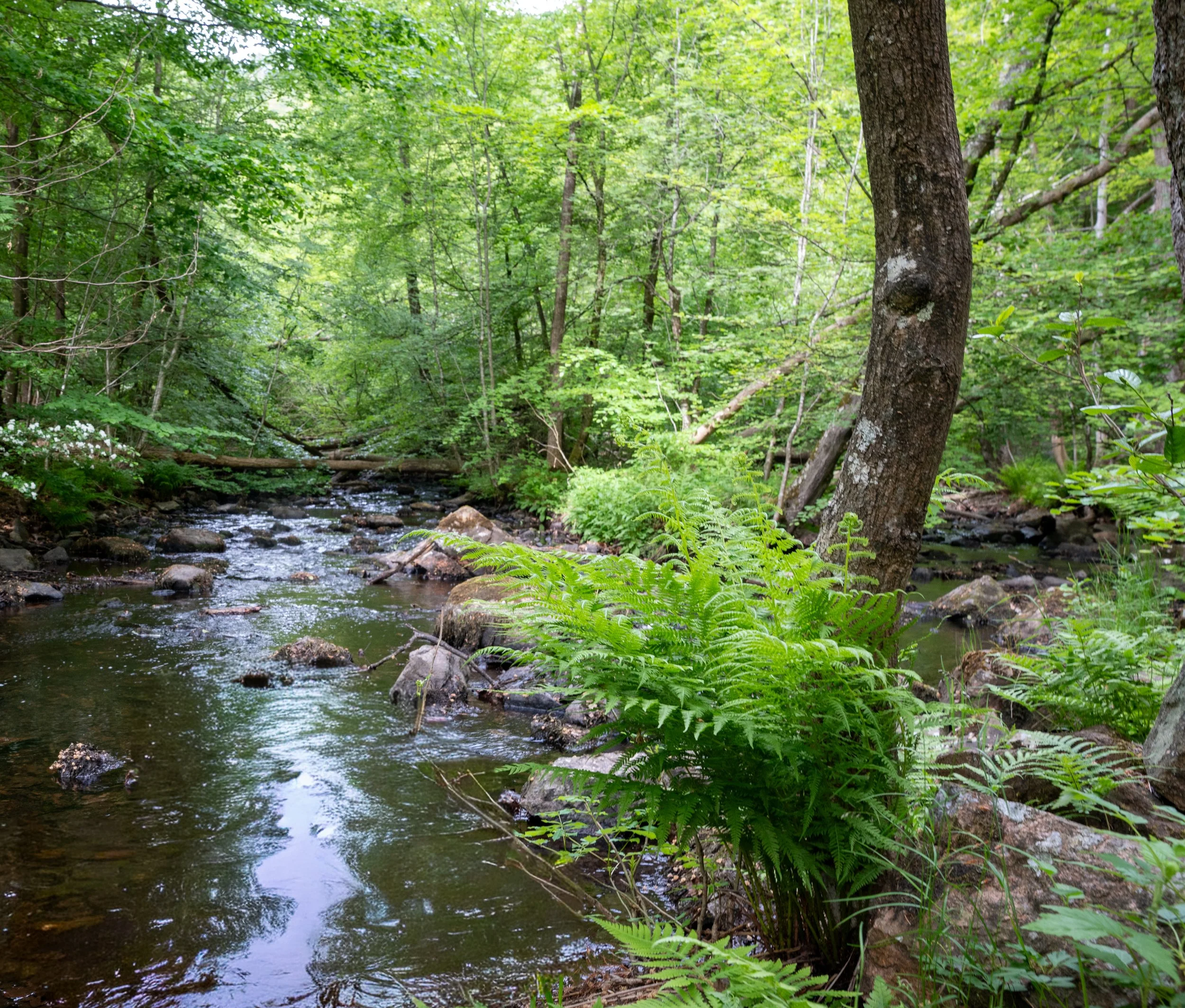
"To the south of the station, there's a large forested area called Söderåsen, the northernmost representative area of Central European broadleaf forest. To the north, we have perhaps the southernmost reaches of the boreal forest."
Söderåsen National Park’s rift valley. Photograph: Henrik Jessen.
To better document this patchwork of agricultural fields, fragmented woodlands, and ecological boundaries, we used a drone to map the air filter station's catchment area from above. For research engineer Daniel Svensson, who handles much of our data management, getting out with the drone was a highlight:
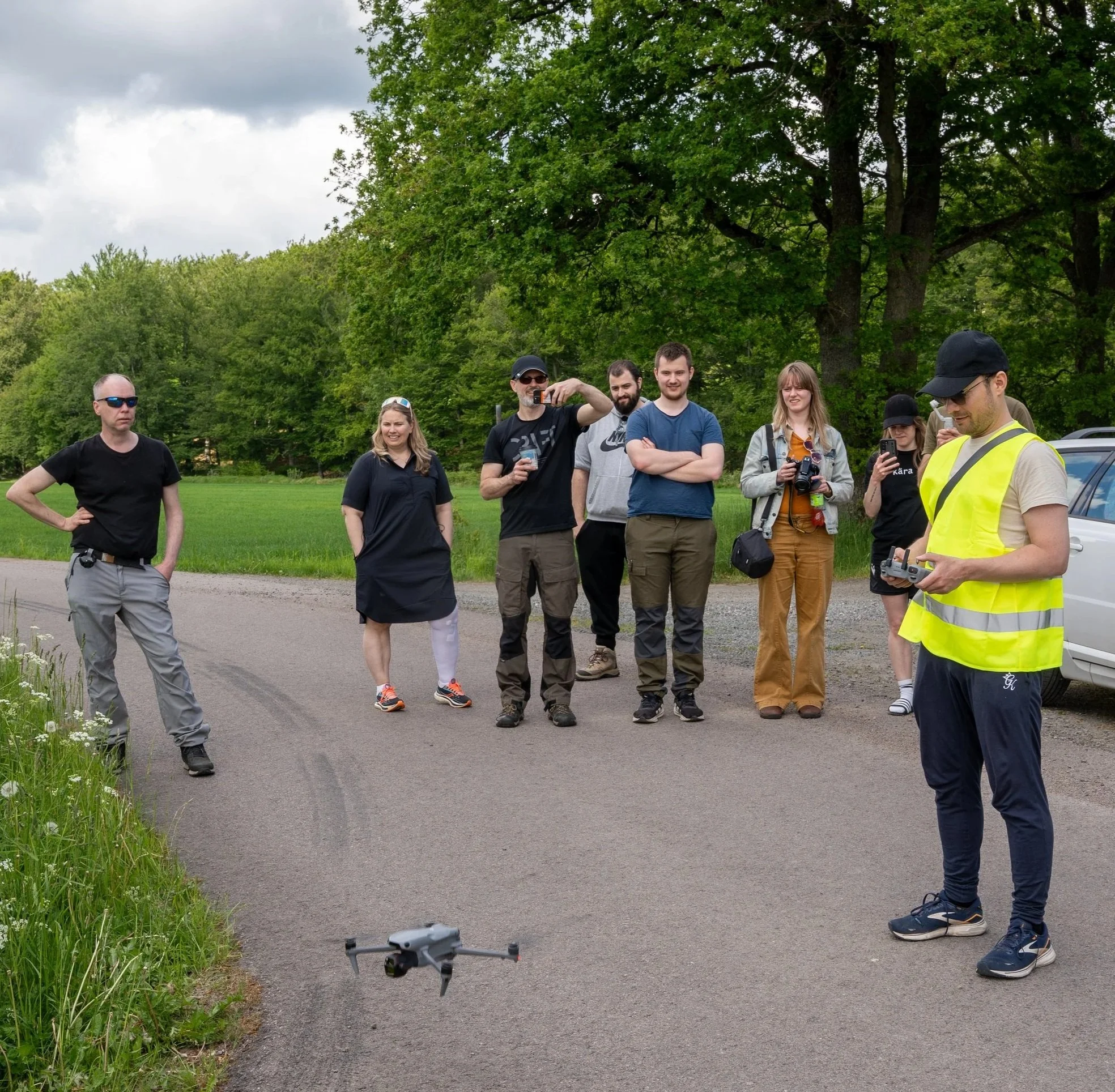
"We used a drone to film the locations and investigate the area, and it's been really fun. I've lived in Umeå all my life, so just being here, seeing the landscape, and understanding which species are here has helped me a lot."
Daniel using a drone to explore Skåne’s ecosystems from above. Photograph: Henrik Jessen.
The focal point of the week was a visit to the Ljungbyhed air filter station itself, where a filming crew from Utbildningsradio (UR) joined us to document project leader Per Stenberg changing the filter. Seeing how these glass fibre sheets capture airborne particles as small as 0.1 μm — part of a system originally established by the Swedish Defence Research Agency in 1957 to monitor radioactive fallout during the Cold War —reminded us of the remarkable physical history behind the data we analyse. Stepping inside the station feels almost like walking into a museum. Many of the original mechanical components from the 1950s remain intact and are still actively running the system today, albeit rather noisily.
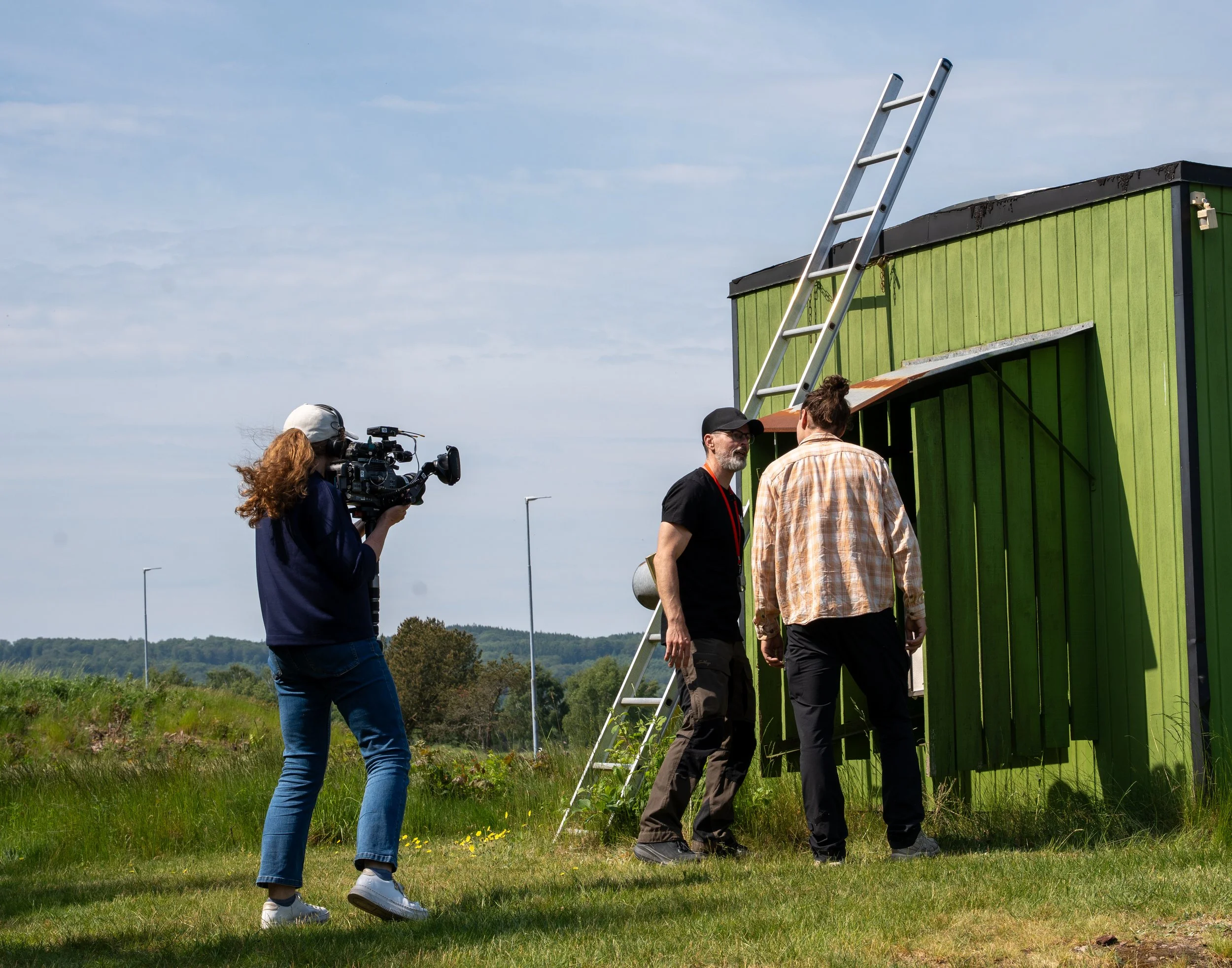
UR film Per changing the Ljungbyhed air filter. Photograph: Henrik Jessen.
The necessity of having a "boots-on-the-ground" perspective became obvious during our field walks. Postdoc Matilda Åslund, whose background is in forest pathology, found herself inspecting a mundane roadside ditch and realising how much the local agricultural landscape differed from her usual work with trees.
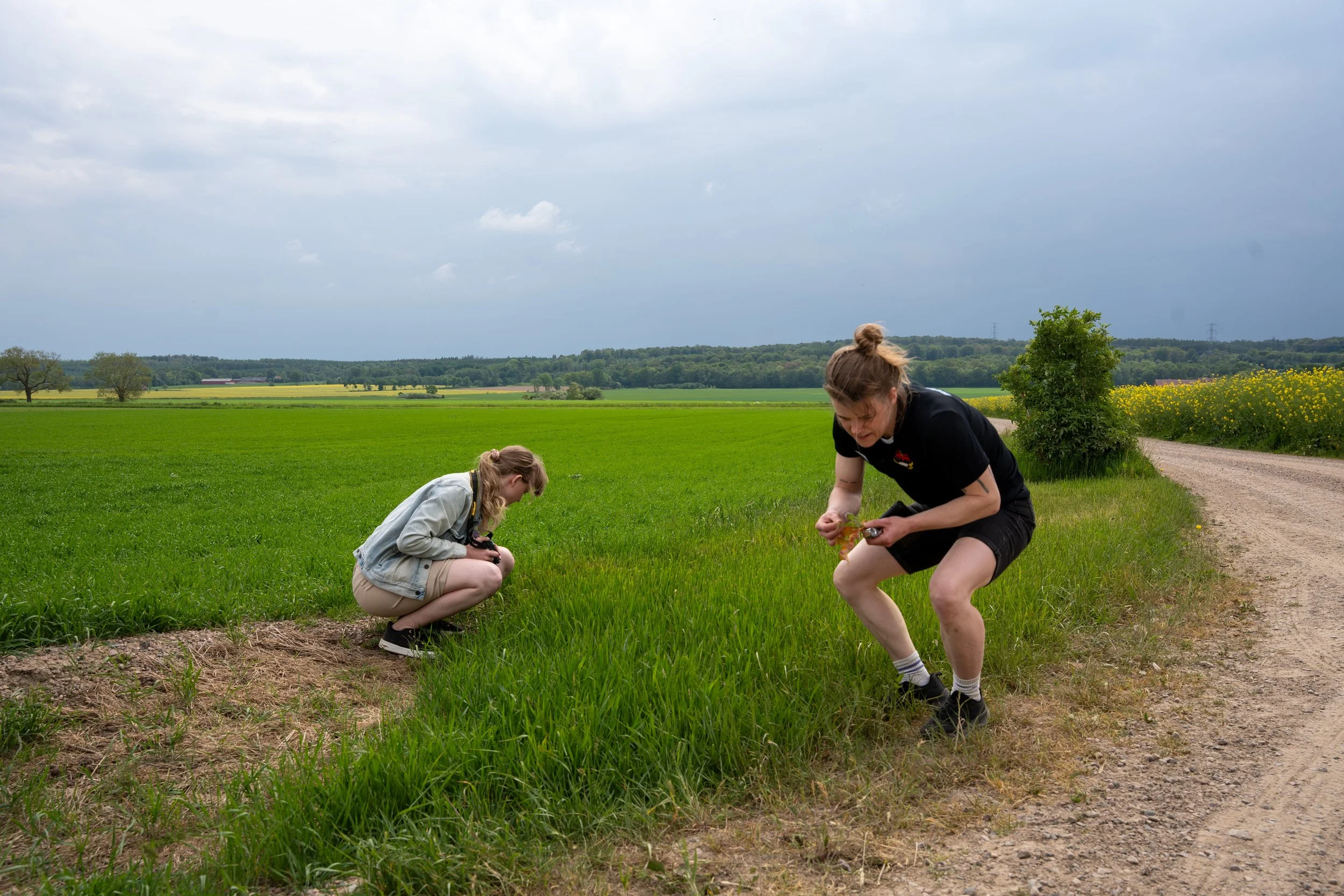
"I looked at all the plants I could see, and I found fungal infections on basically every species I found, and realised that I don’t really know what it is. I’m used to looking at trees... But when looking at crops, it’s very different. And that’s a good thing to realise."
Bea (left) and Matilda (right) investigate the plants. Photograph: Henrik Jessen.
For Matilda, the trip was also an important moment for how she connects to the SweBITS dataset as a whole:
"This is the first time I've worked with data that I did not collect myself, and I think it's important to see where it comes from, how it is collected, and get a picture of what the landscape looks like."
Exploring Söderåsen National Park
Just down the road from Ljungbyhed, and well within the air filter station’s catchment area, lies Söderåsen National Park. Here the park’s director, Tove Hultberg, took us on an informative guided hike through 1,600 hectares of protected, beech-dominated broadleaf forest and up to the beautiful viewpoint of Kopparhatten. She explained the history, geology, and unique ecological features of the park, highlighting the critical role of conservation for the region's biodiversity.
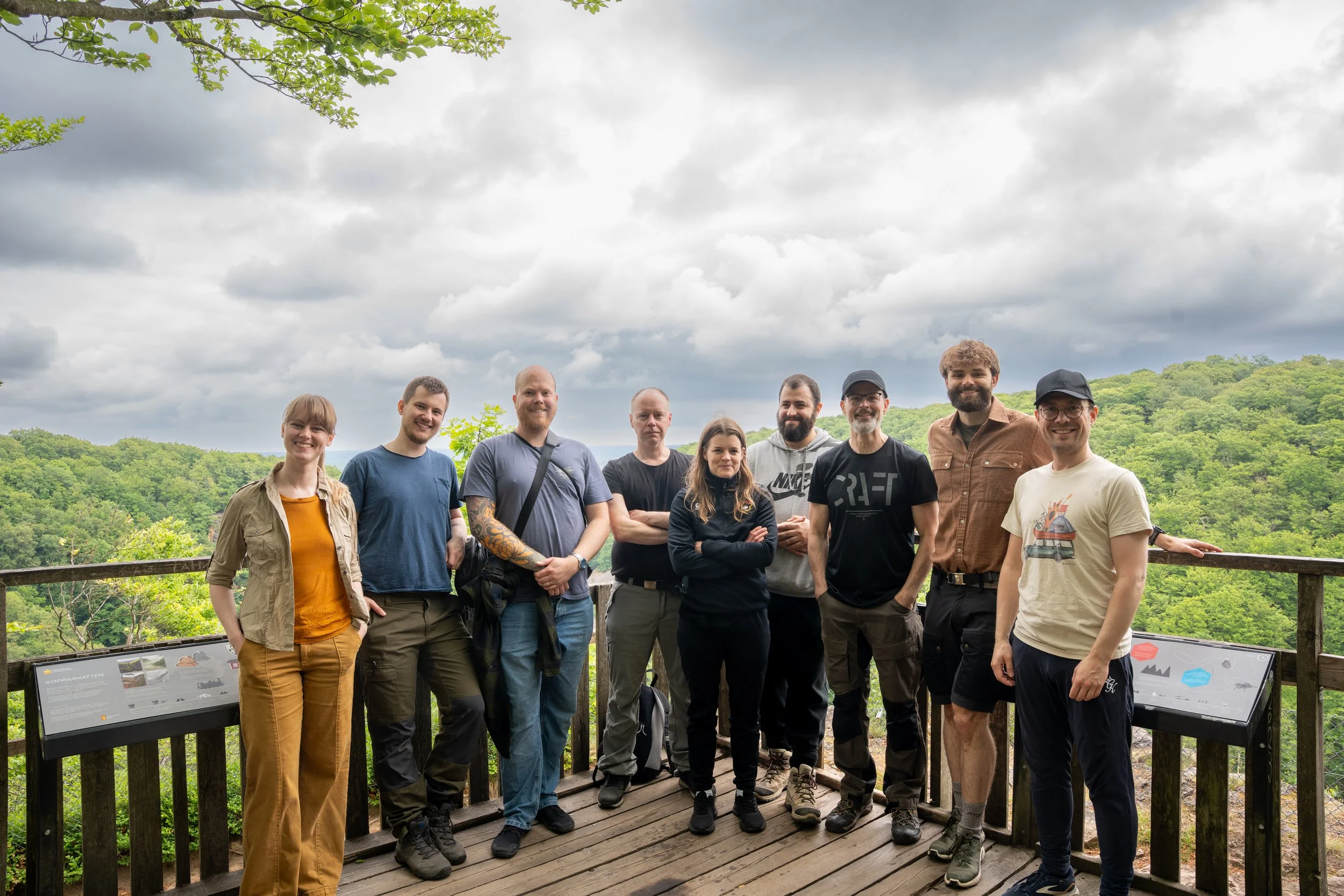
The SweBITS team at the Kopparhatten viewpoint in Söderåsens National Park. Photograph: Tove Hultberg.
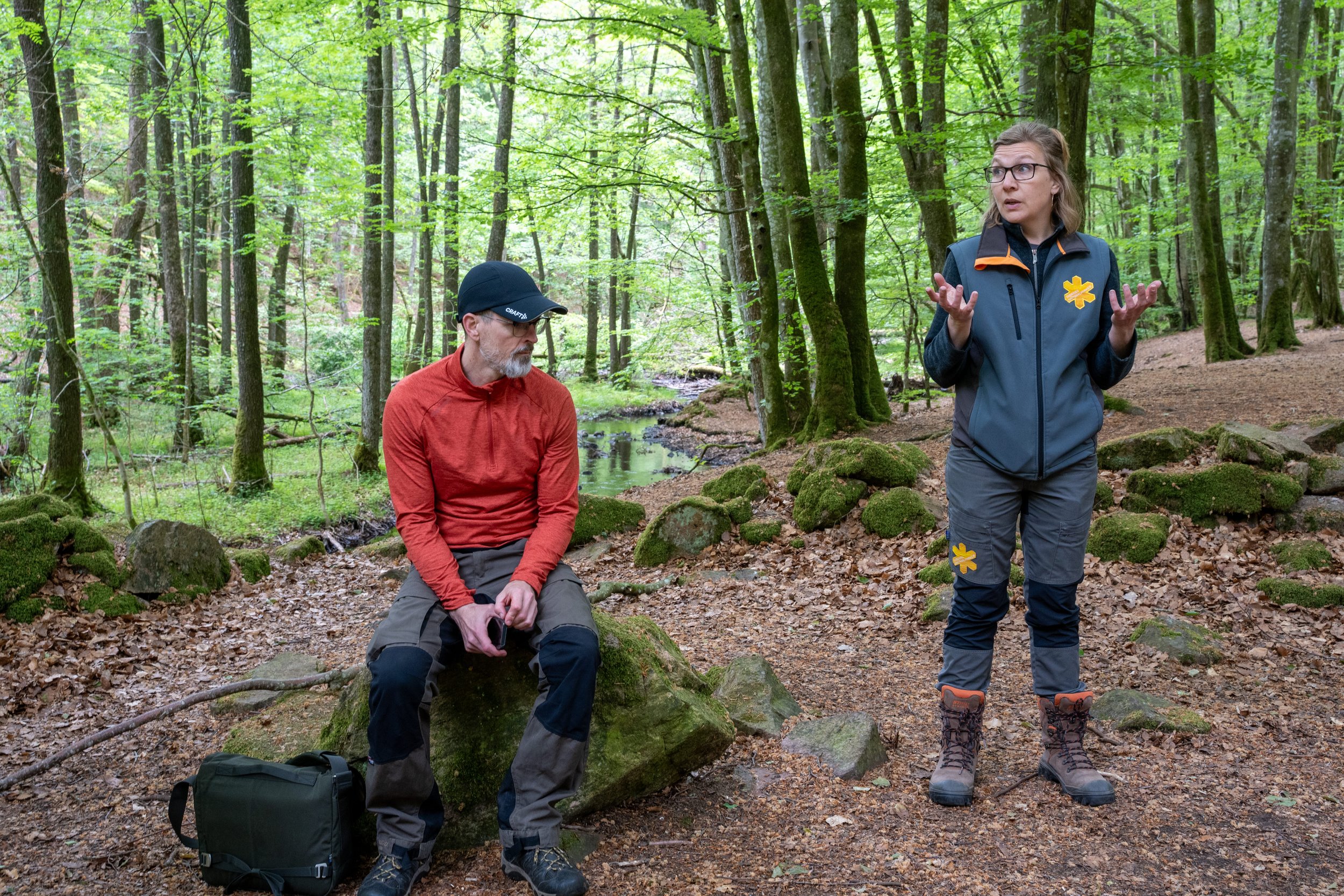
"We do know that we have quite a lot of threatened insects, bats, and also a lot of lichens and mosses that thrive in this very stable climate that the geology of the rift valleys gives us. We have a lot of red-listed species that we need to take care of, because if we do nothing, we will lose them."
Tove Hultberg explains the natural history of Söderåsens National Park. Photograph: Henrik Jessen.
Protecting these vulnerable species requires a deep understanding of baseline ecosystem health, but local management faces a significant data gap. As Tove noted:
"To a large extent, we don’t really know, because this has been a national park for about 25 years. Before that, some of it was nature reserves, but we don’t have the long series of monitoring that we would like."
This lack of long-term monitoring is precisely where the SweBITS project can contribute. With its multi-decade archive of airborne eDNA, the project offers a rare opportunity to help bridge this gap by reconstructing past biodiversity patterns and tracking ecological change over time.
When Field Visits Explain Odd Data
Our site visits also provided immediate, real-world context for some of the strange signals that we have found surprising.
A guided tour of SLU Alnarp Park, near Malmö, helped solve a particularly confusing puzzle. Our data often shows distinct weekly signatures for non-native species such as Ginkgo biloba: an exotic tree that would not be expected to occur naturally in Sweden. However, walking through Alnarp, surrounded by curated botanical collections, made the explanation clear: these are cultivated species present in managed environments, which the air filters are sensitive enough to detect. Per explained:
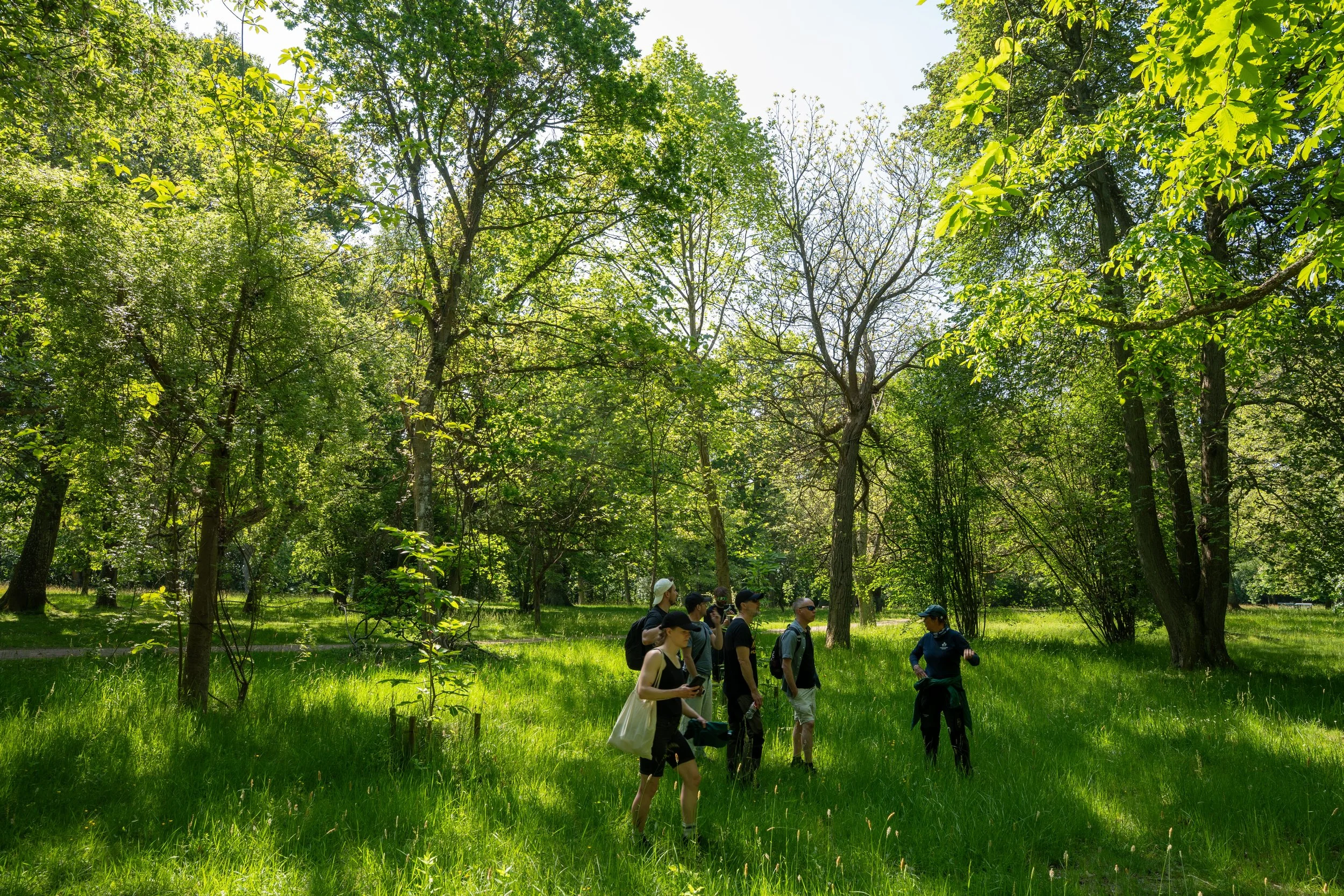
"Some weeks we see Ginkgo biloba. It's not supposed to be in Sweden, but then we get there and it's like, yeah, we have them here because we grow them here. So that could actually explain some of our stranger signals. Trees are an important part of our data because they release a lot of pollen, they have large genomes, so we have very good signals for them in the data."
The SweBITS team enjoy a guided tour of the SLU Alnarp Park grounds. Photograph: Henrik Jessen.
Making Connections
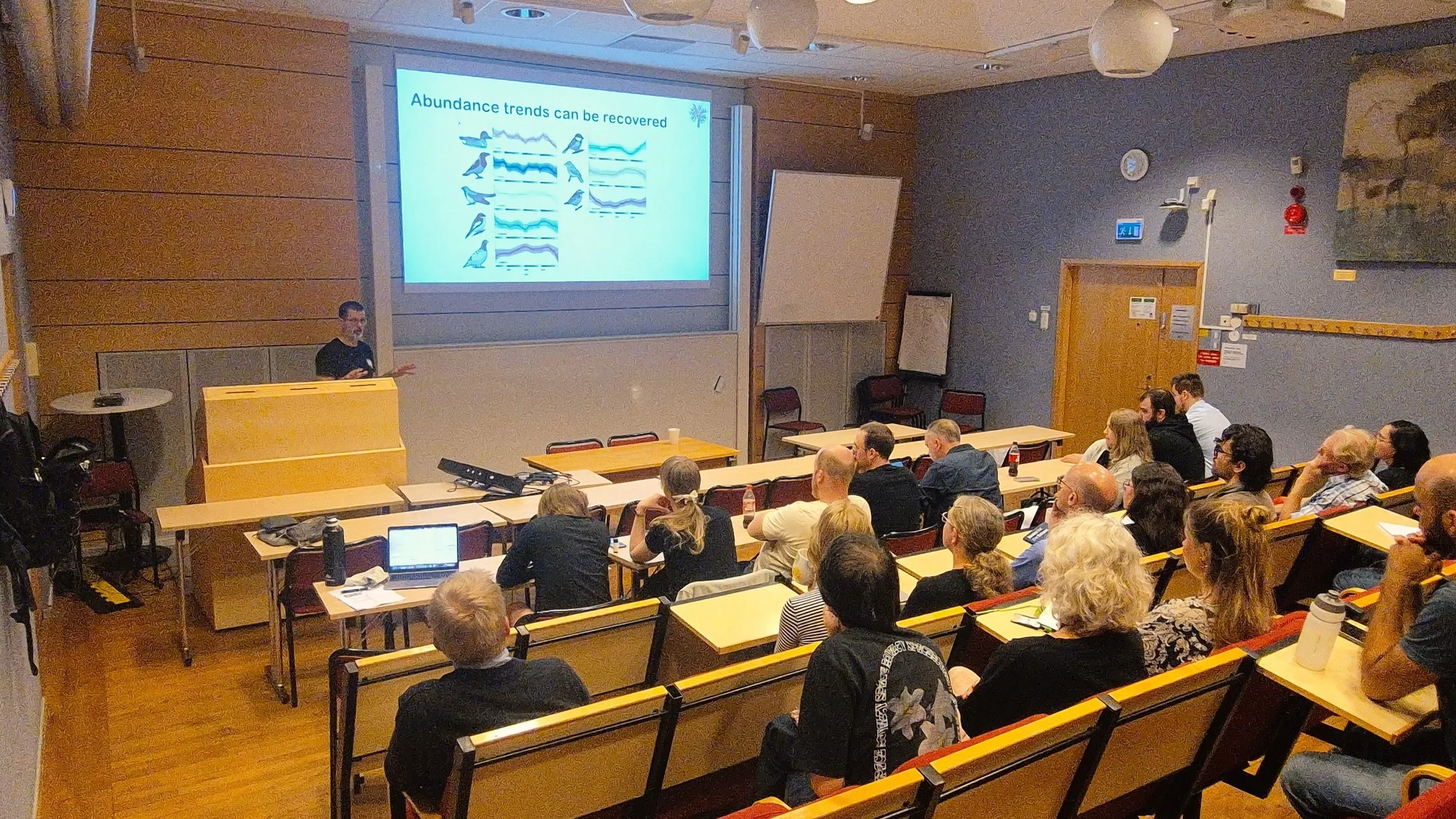
We wrapped up the week at Lund University, where Per was invited to give a seminar on the project. It was a valuable opportunity to share the story of Sweden’s air filter archive and connect with local researchers working in the area.
While we have already made some fascinating ecological discoveries, we are still only scratching the surface of what this archive can reveal. In his talk, Per emphasised that the real potential of the air filter archive lies in wider use and collaboration. The dataset is far too rich for a single group to fully explore, and unlocking its value will depend on sharing it with other researchers who can bring new ideas and perspectives.
A key limitation in this work is the availability of reference genomes, which restricts how much of the DNA signal can currently be identified. As Per explained:
“We have reference genomes for less than 1% of the biodiversity out there, so we are basically blind to the vast majority of diversity. And we don’t even know, maybe, half of those that exist.”
Per’s seminar at Lund University. Photograph: Michael Hawgood
To move forward, the project will require more complete reference databases, as well as species-specific expertise to help interpret the data. The team is actively working towards making the archive more accessible, and welcomes collaboration from researchers working across biodiversity and genomics.
Team-building Experience
Ultimately, the trip achieved something more important than data analysis or computational output: team building. Spending five days together in the field — sharing meals, being outdoors, and exploring local ecosystems — reminded us why we do this work. Analysing ecological data without a grounded sense of the landscapes it represents risks misinterpretation. Seeing the terrain, touching the leaves, and occasionally sitting down to share a beer at the end of the day all add context that cannot be captured from behind a screen alone.
This sentiment was shared across the entire team as we reflected on our time away from our usual desks. Daniel noted:
“I think it’s been a team-building experience, which is very nice. You get closer to your colleagues, and I think work will be even smoother going forward.”
Per agreed, highlighting the value of stepping away from the office environment and spending time together in the field:
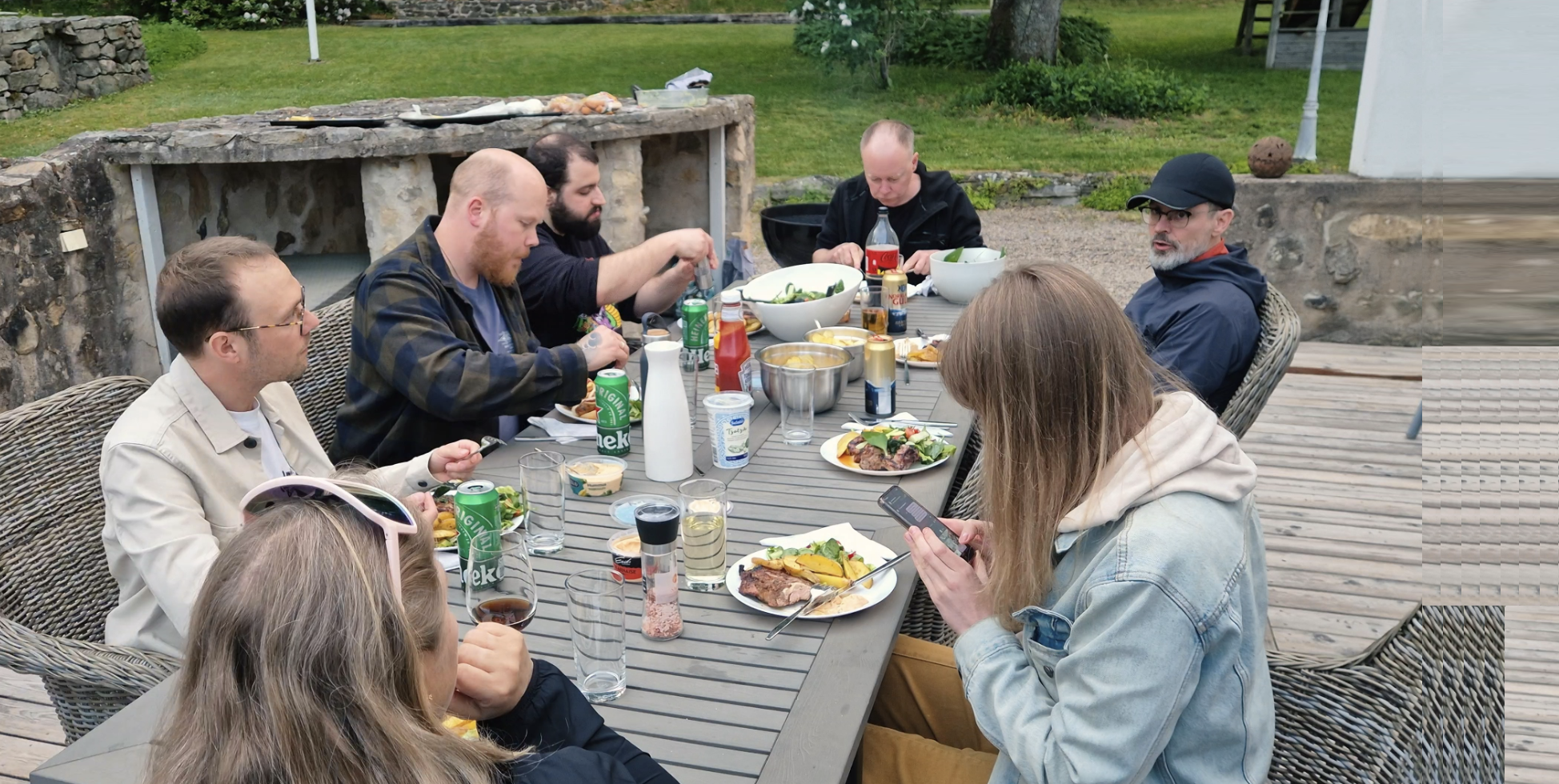
“I think my favourite part of the week was that we got to do something different. The entire group, more or less, was able to make a trip together, learn lots of stuff, have some fun together, eat good food, and just do something different than sitting by the computer. So I really enjoyed that.”
The SweBITS team BBQing back at the house. Photograph: Michael Hawgood
Final reflections
As we were wrapping up the trip and reflecting on the sheer scale of the historical archive we are working with, Per left us with a final thought on where this research is heading:
“I think the work we’re doing is the dawn of a revolution in ecosystem science. And I want to add that I don’t think what we are doing is going to be the end solution that will solve all our problems, but it’s the start of something that, with more work, and more people doing similar things, is going to be a true revolution in how we understand ecosystems.”