
By Michael Hawgood
Hidden away in the far north of Sweden is an air filter station that has been continuously collecting airborne biological material for eDNA analysis, helping us build a genetic picture of Sweden’s precious northern ecosystems. These landscapes are changing, and our northernmost 60-year archive of airborne eDNA gives us a unique opportunity to understand what is happening.
Four members of the SweBITS team travelled north to visit the Kiruna air filter station and, in doing so, get a better sense of the landscape behind the data.
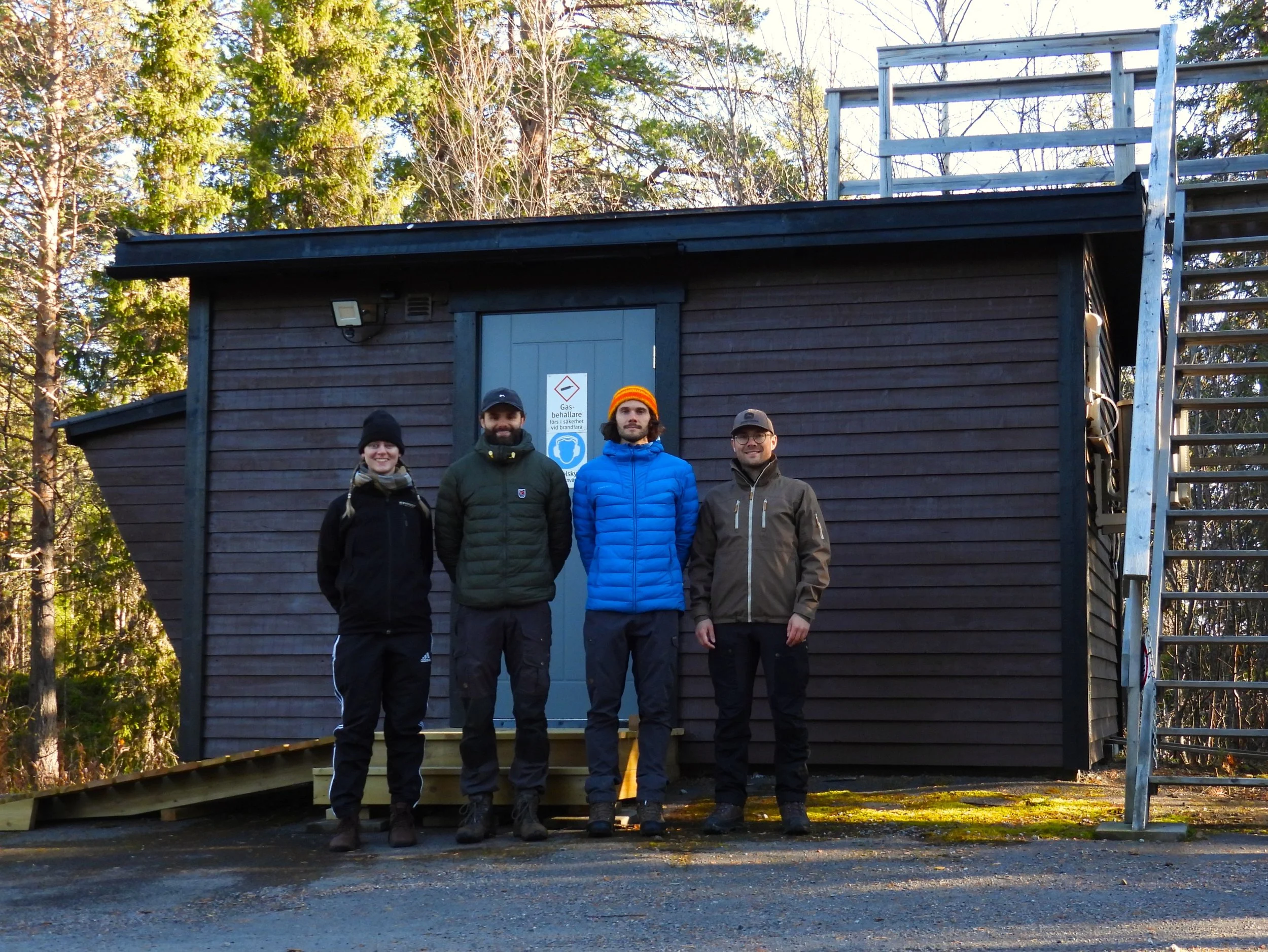
The SweBITS team at the Kiruna air filter station.
From left: Bea Andersson, Michael Hawgood, Marco Cunico and Daniel Svensson.
Photograph: Bea Andersson.
Exploring the Landscape Behind the Data
The environment here is a stark contrast to the ecosystems around our southernmost air filter station in Ljungbyhed. Harsh weather, extreme temperatures, long periods of winter darkness and heavy snowfall create challenging conditions, and species here are specially adapted to survive them.
Sweden’s northern landscapes contain some of the country’s most unique and spectacular natural areas, including Natura 2000 sites, the Laponia UNESCO World Heritage Site and national parks such as Abisko (Ábeskovvu) and Sarek (Sárrák). Their remote landscapes and, in some cases, relatively undisturbed ecosystems provide important habitats for a wide range of species.
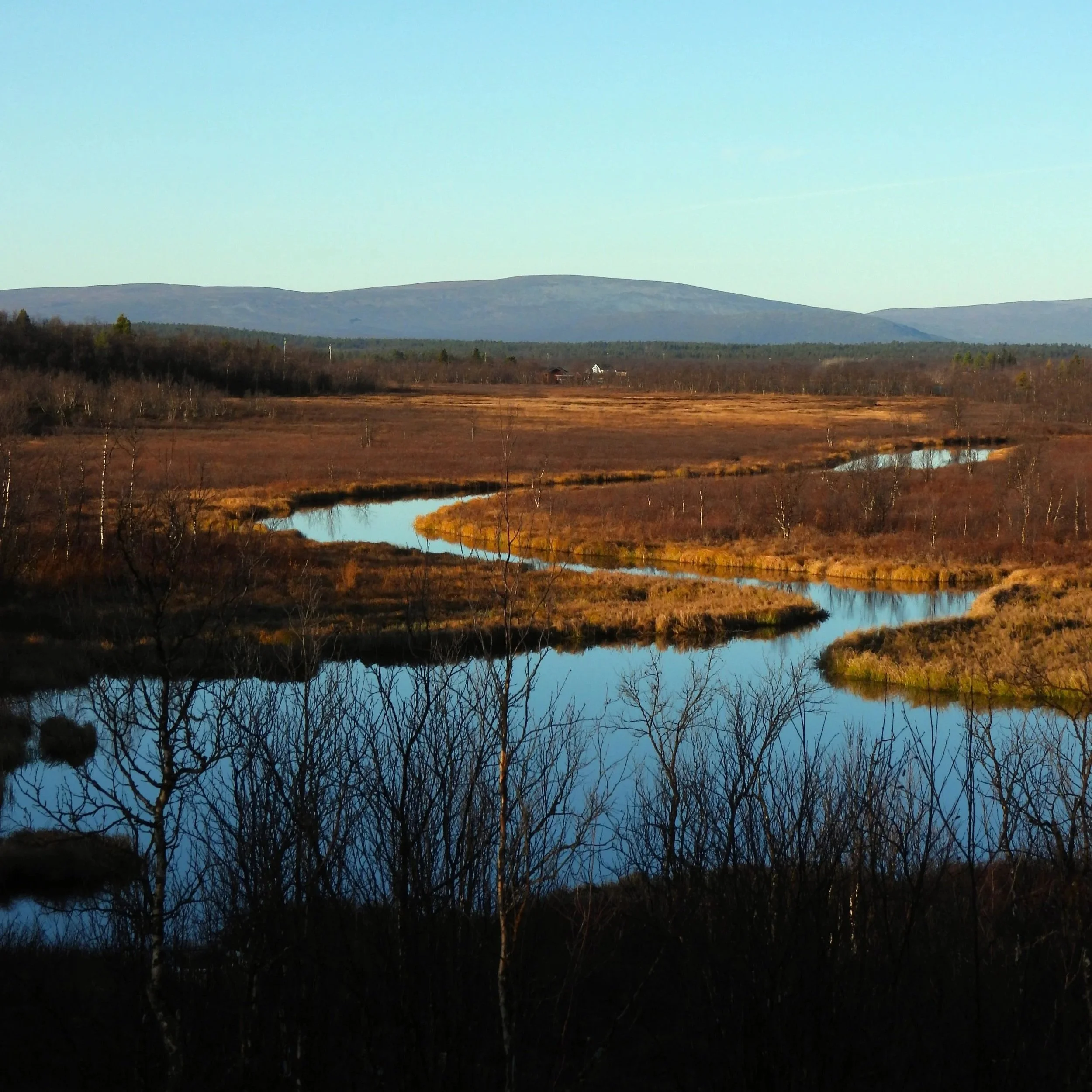
Sweden’s Arctic landscapes, south west of Kiruna towards Nikkaluokta.
Photograph: Bea Andersson.
But these ecosystems are also particularly vulnerable to a changing climate. As temperatures rise, the Arctic is warming faster than the global average, putting pressure on species and ecosystems adapted to cold conditions. Glaciers are retreating, and Sweden’s remaining glaciers are expected to disappear before the end of this century. As the climate warms, Arctic and alpine species may lose suitable habitat, while species and ecosystems from further south can expand northwards. This process, sometimes referred to as borealisation, is already changing northern ecosystems.
We travelled north to explore the surroundings of the air filter station and better understand the environments contributing eDNA to our dataset. We also wanted to document these environments from above, using a drone to capture aerial footage of the forests, wetlands, mountains and areas shaped by human activity. We began at the station itself, looking at what was immediately around it, before travelling further north to visit Abisko National Park, then west into the mountains at Nikkaluokta (Nihkkáluokta). Along the way, we also explored areas shaped more directly by human activity, including the mine, peat extraction and areas of forestry.
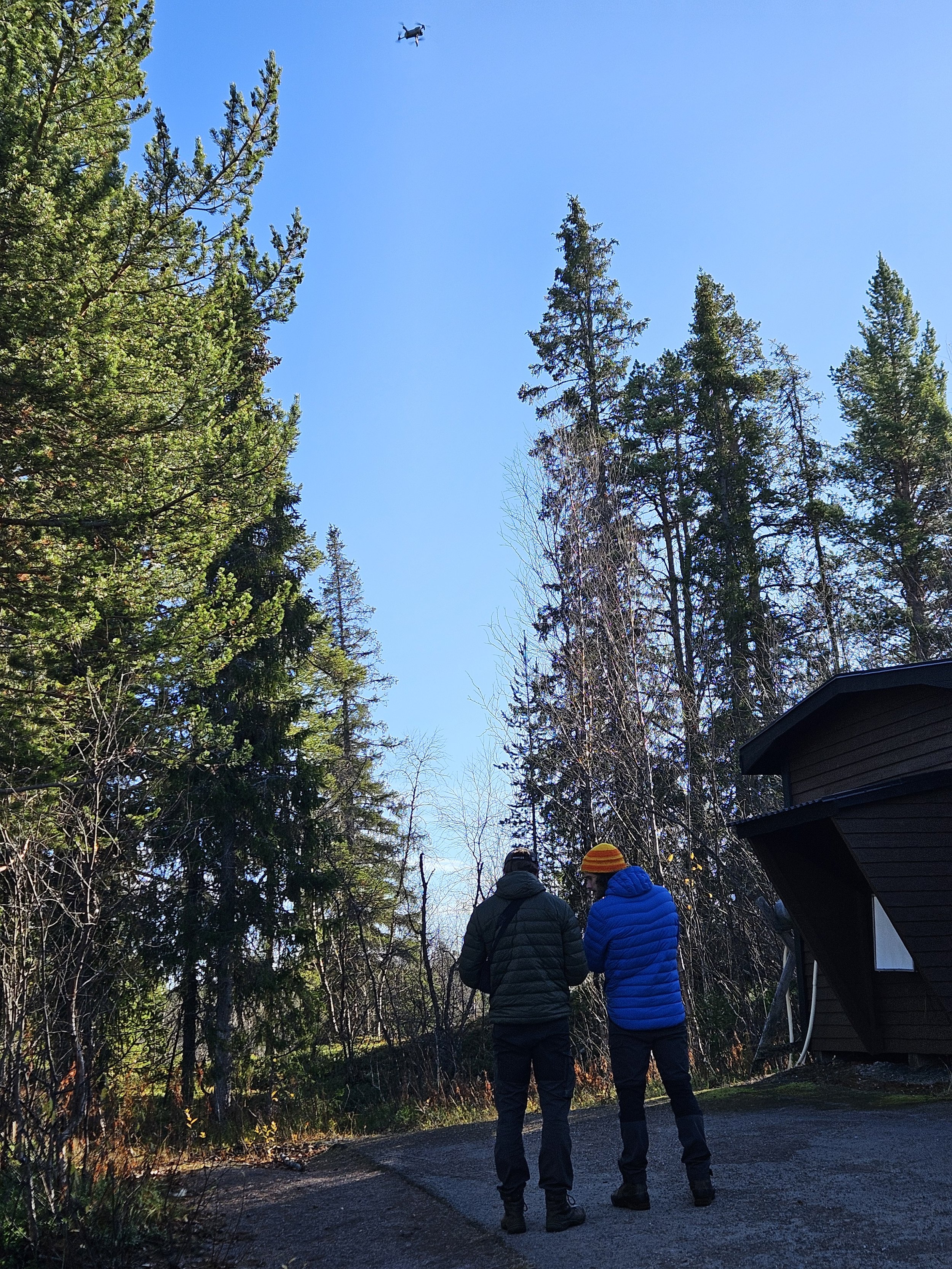
Flying our drone above the air filter station to capture the surrounding landscape.
Photograph: Bea Andersson.
Kiruna: a Landscape Between Forests and Mountains
Kiruna is an interesting mining town, situated in the shadow of the world’s largest underground iron ore mine. The town grew around the mine, while also serving as a gateway for visitors travelling north from Stockholm and further into the mountains.
To the east of Kiruna, along a gravel road through the forest, lies the air filter station. Here, the surroundings were very different from what we had seen a few months ago around Ljungbyhed. The surrounding forest was a mix of old conifers and a large proportion of birch and other deciduous trees, interspersed with bogs, mountain birch and open mountain heath at higher altitudes. Much of the forest had an old, almost primeval character, with little of the uniform structure associated with managed forestry.
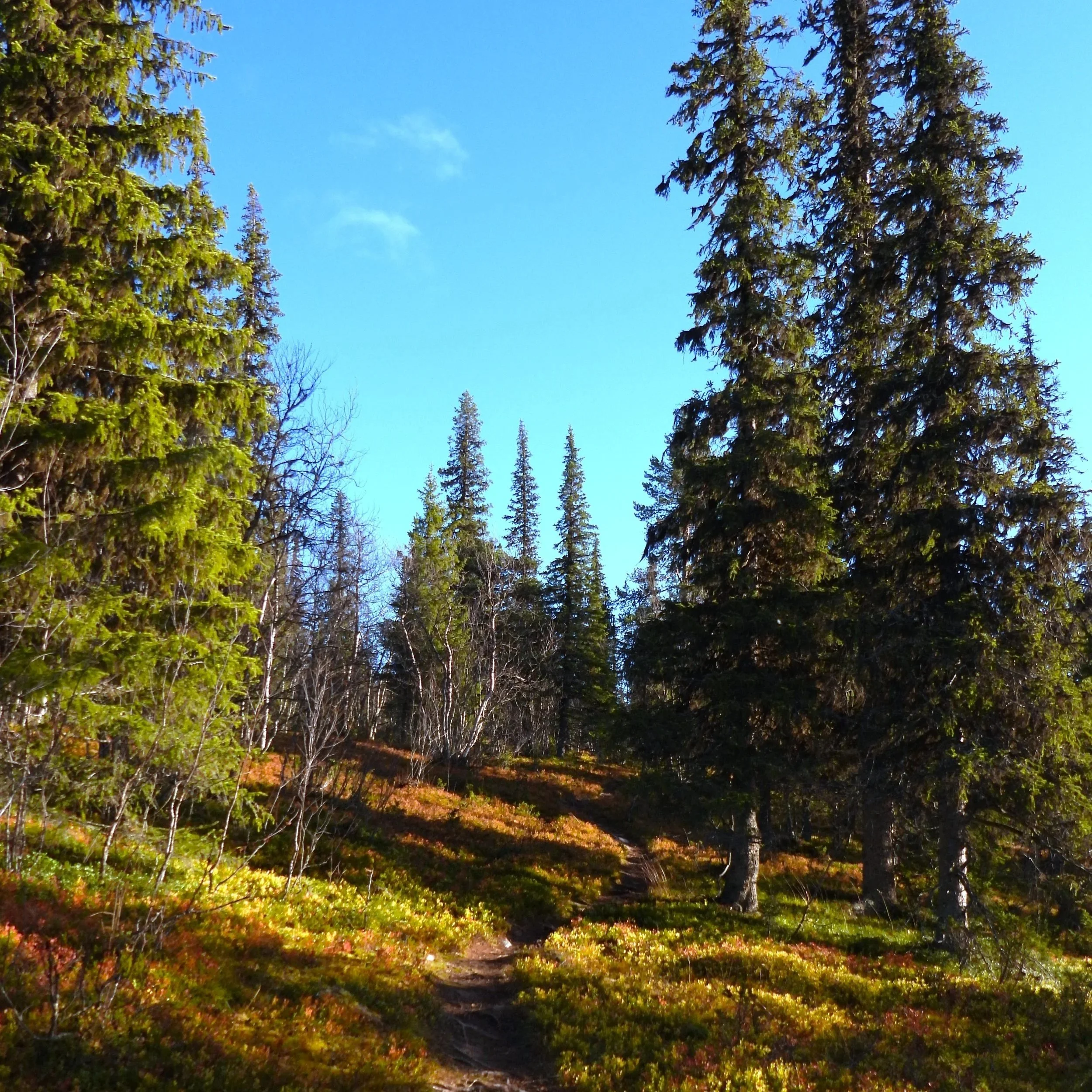
Aptasvaara nature reserve surrounding the air filter station.
Photograph: Bea Andersson.
But the landscape around Kiruna is not untouched. The enormous iron ore mine is the most striking example, dominating the landscape around the town. Further out, we also encountered peat extraction sites and areas of clear-cut forest. In contrast to the old forests around the air filter station, these areas show the different ways in which human activity is shaping the northern landscape.
For us, this contrast was particularly interesting. The air filter is collecting DNA from a landscape that is not a single, pristine ecosystem, but a mixture of forests, wetlands, mountains and areas shaped by human activity. All of these environments contribute to the biological signal captured in the air.
The Gateway to Lapland
North of Kiruna lies Abisko National Park and Torneträsk (Duortnosjávri), Sweden’s largest mountain lake, framed by the distinctive peaks of Lapporten (Čuonjávággi), an iconic U-shaped valley often referred to as the “Gateway to Lapland”. Established in 1909, Abisko was one of nine national parks created in Sweden that year, making Sweden the first country in Europe to establish national parks and marking the beginning of the country’s national park system.
We were also given a warm introduction to the Abisko Scientific Research Station and the surrounding area, helping us get a better sense of the landscape and the research taking place there.
For more than a century, national park status has helped protect Abisko’s landscapes and biodiversity from many forms of direct human disturbance. But protection within the park’s boundaries cannot shield these ecosystems from wider environmental change. Rising temperatures and changing precipitation are already affecting the northern landscape.
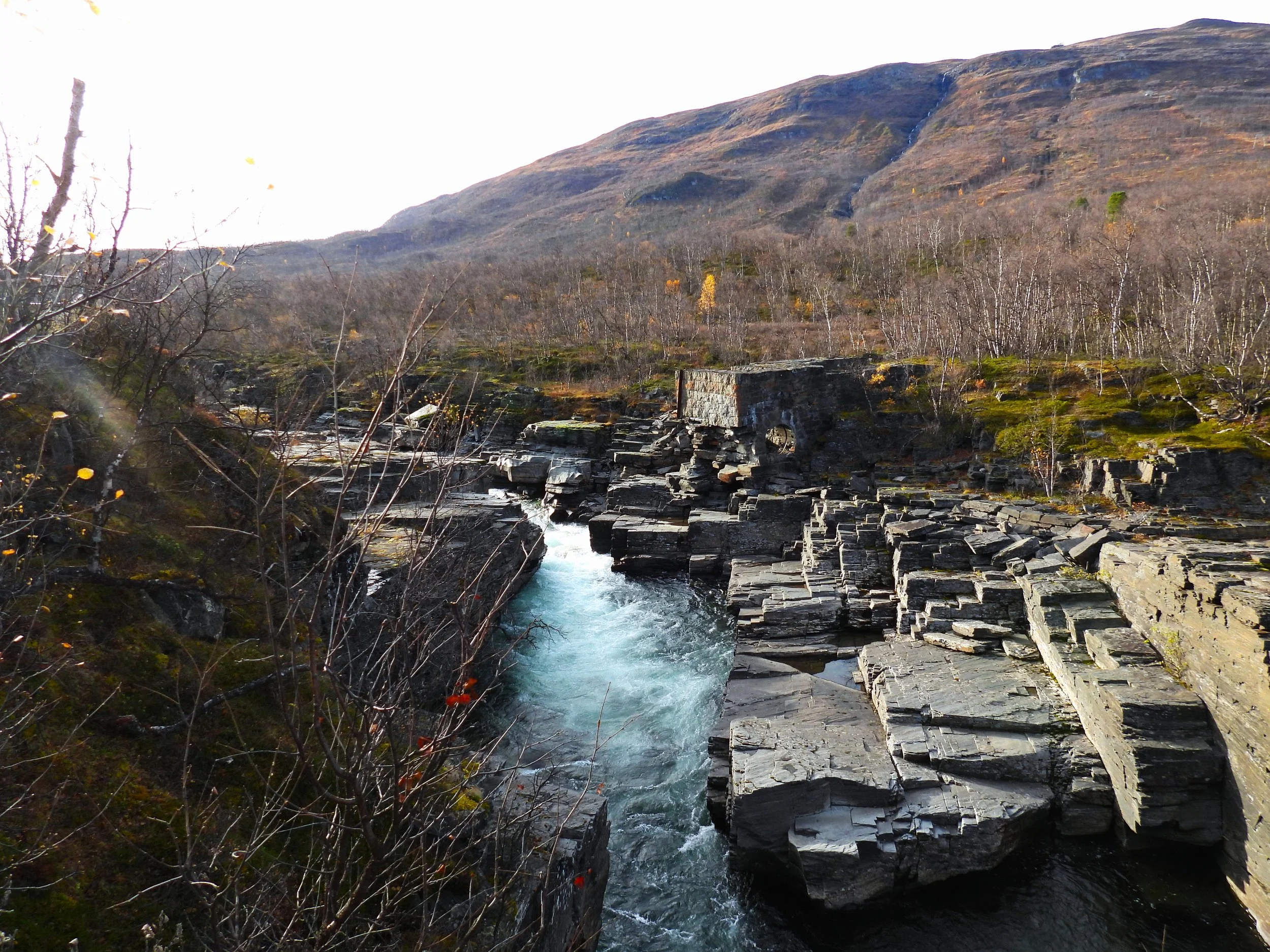
The Abiskojåkka river fllowing through Abisko National Park.
Photograph: Bea Andersson.
The organisms living in and around Abisko release DNA into the surrounding air, some of which can be transported towards the Kiruna air filter station. Our previous work showed just how broad this signal can be. From the archived filters, we detected thousands of genera spanning all three domains of life and both terrestrial and aquatic environments, including plants, fungi, microbes, fish, birds and mammals. Even the characteristic reindeer of Lapland can be detected in the air-filter DNA.
Torneträsk adds another dimension to this picture. The lake and its surrounding wetlands represent aquatic environments alongside the forests, heathlands and mountain ecosystems around them. We have detected DNA from aquatic organisms in the Kiruna archive, showing that the biological signal captured by an air filter can extend far beyond the organisms living immediately around the station. In fact, we have even detected DNA from cod, with the strongest signals occurring when air masses had travelled northwards over the Norwegian Sea, more than 160 kilometres away. The air filter is therefore capturing biological traces from a much wider area, including ecosystems that we cannot see from the station itself.
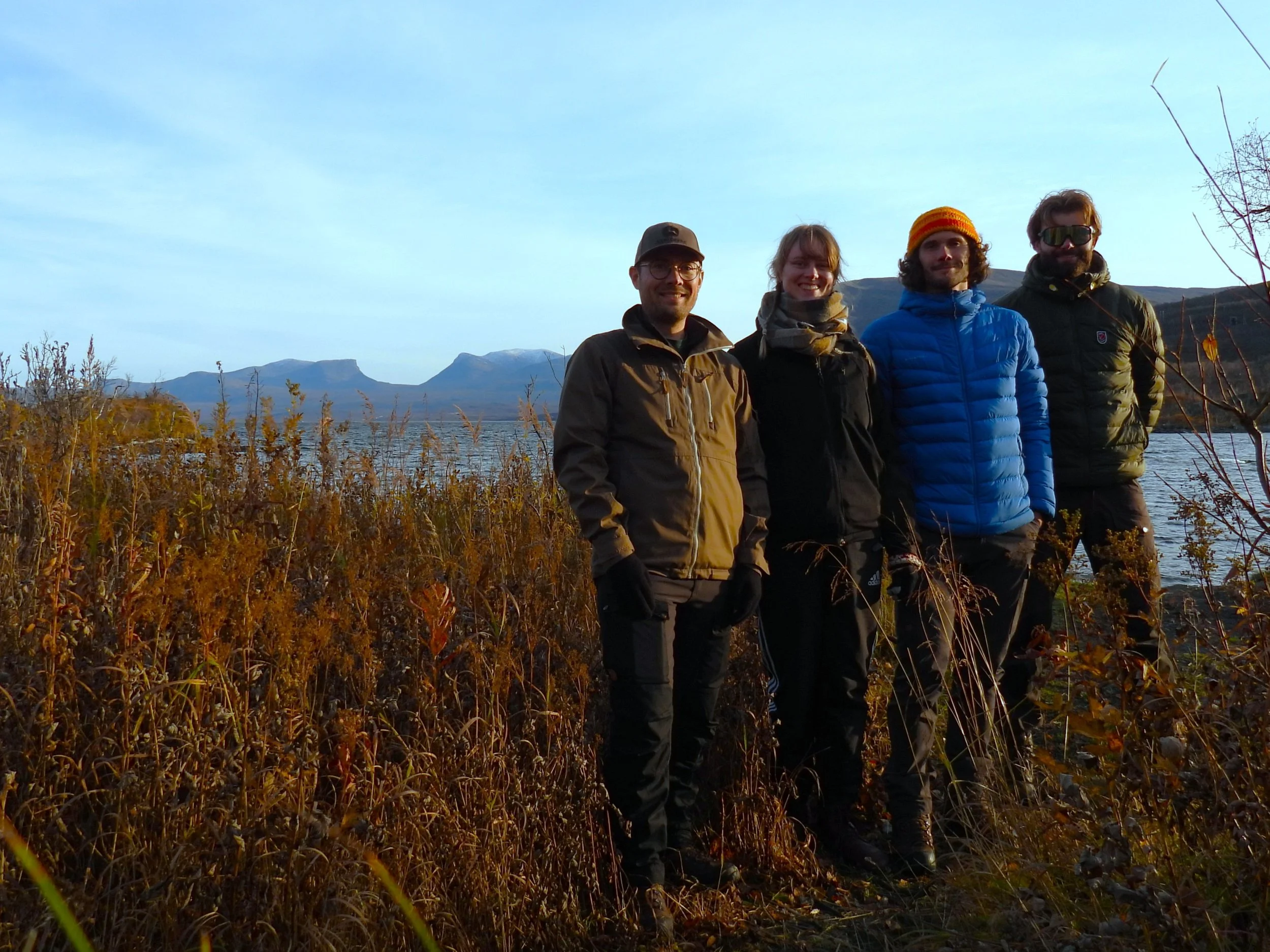
The SweBITS team in front of Lapporten.
From left: Daniel Svensson, Bea Andersson, Marco Cunico and Michael Hawgood.
Photograph: Bea Andersson.
Another striking feature of the area is its palsa mires. These unusual wetlands contain raised mounds of peat underlain by permafrost, creating a mosaic of dry and wet habitats. Around Torneträsk, many of these palsas are showing signs of degradation as the underlying permafrost thaws, with some collapsing into wetter peatland.
Spending the day here provided us with a glimpse into some of the diverse northern ecosystems represented in the eDNA archive, from the mountain birch forests and wetlands around Abisko to the alpine landscapes surrounding Torneträsk.
The Road to Sweden’s Highest Mountains
Nikkaluokta is a small village at the end of the road, where the journey towards Kebnekaise (Giebmegáisi), Sweden’s highest mountain, begins. From here, the landscape rises from the birch forests and wetlands of the lower valleys into an increasingly open alpine environment, with the tree line giving way to mountain heath, rocky slopes and tundra.
The Kebnekaise massif is also home to some of Sweden’s largest glaciers. These are among the most visible reminders of the rapidly changing mountain environment, with the glaciers retreating as temperatures rise.
Higher up, the landscape becomes increasingly exposed and dominated by species adapted to short growing seasons, low temperatures and long periods under snow. It is a very different environment from the forests around the Kiruna air filter station, but it is still part of the wider landscape contributing biological material to the air.
Walking into this landscape gave us another perspective on the range of environments represented in the northern eDNA archive, from forests and wetlands around Kiruna to the open alpine ecosystems surrounding Kebnekaise.
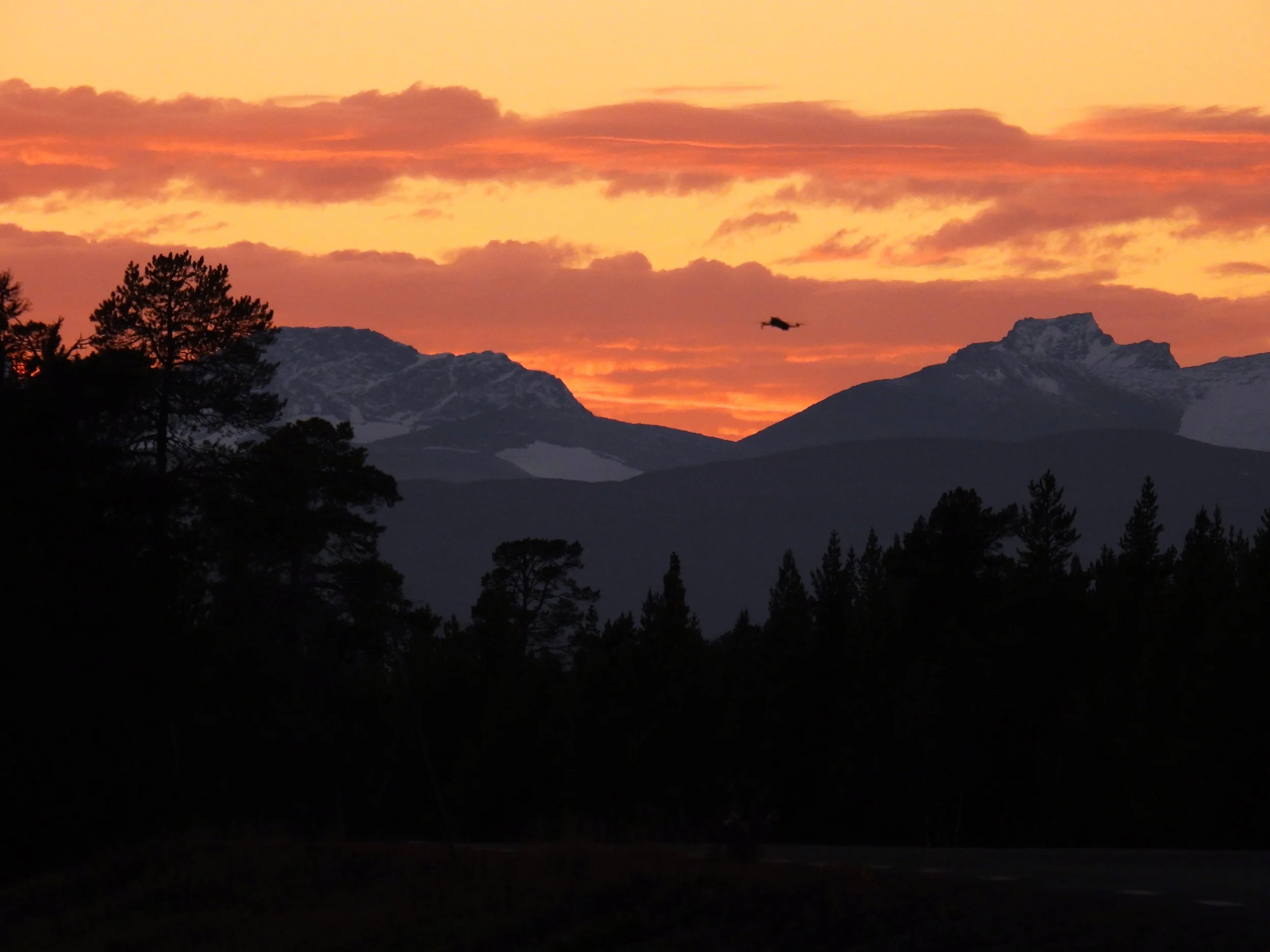
Using the drone to capture the sunset over the Kebnekaise mountain range.
Photograph: Bea Andersson.
Observing the Observable
The air filters allow us to detect the hidden and often unobservable components of these ecosystems, from microorganisms to other forms of life that are too small to see directly. But there is still something special about seeing the wildlife with your own eyes.
During the trip, some of our highlights were spotting capercaillie, moose and reindeer. These encounters were a reminder that behind every DNA sequence is a living organism somewhere in the landscape.
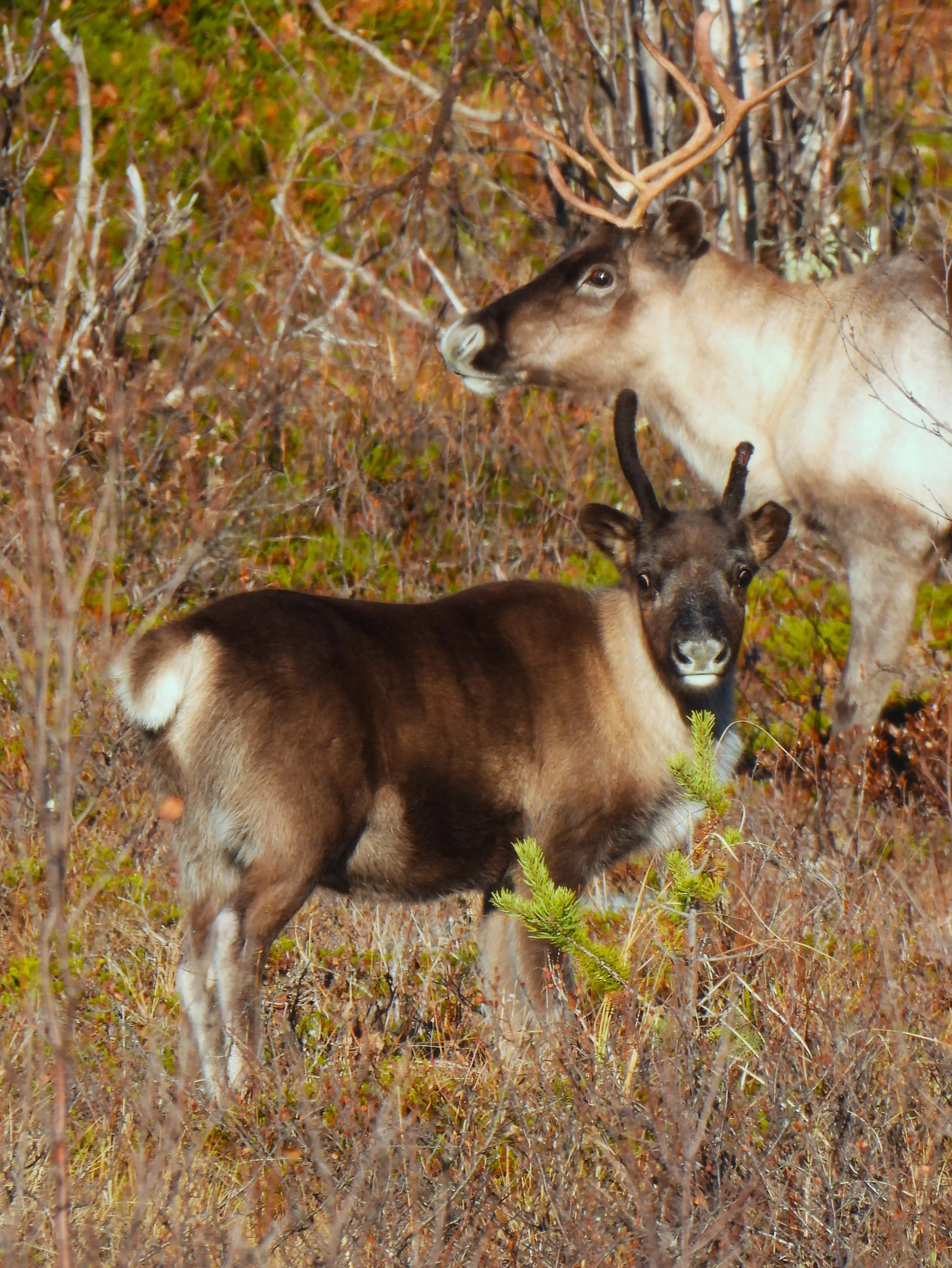
A reindeer and calf spotted on the road to Nikkaluokta.
Photograph: Bea Andersson.
Reflections From the North
We had hoped to visit while the mountain birch trees were glowing bright orange with autumn colour, but we arrived too late. Instead, skeletal birch trees filled the landscape, with only the occasional lone tree still holding onto its fiery leaves. In a way, though, this gave us a different perspective. With the canopy mostly bare, our gaze could fall onto the forest floor, revealing details that would normally be hidden beneath the leaves.
Seeing these landscapes from the ground and from above made it easier to imagine what those sequences actually represent. The DNA in the filters is not simply a collection of species names. It is a biological record of the forests, wetlands, mountains and waters surrounding the station, captured week after week, year after year.
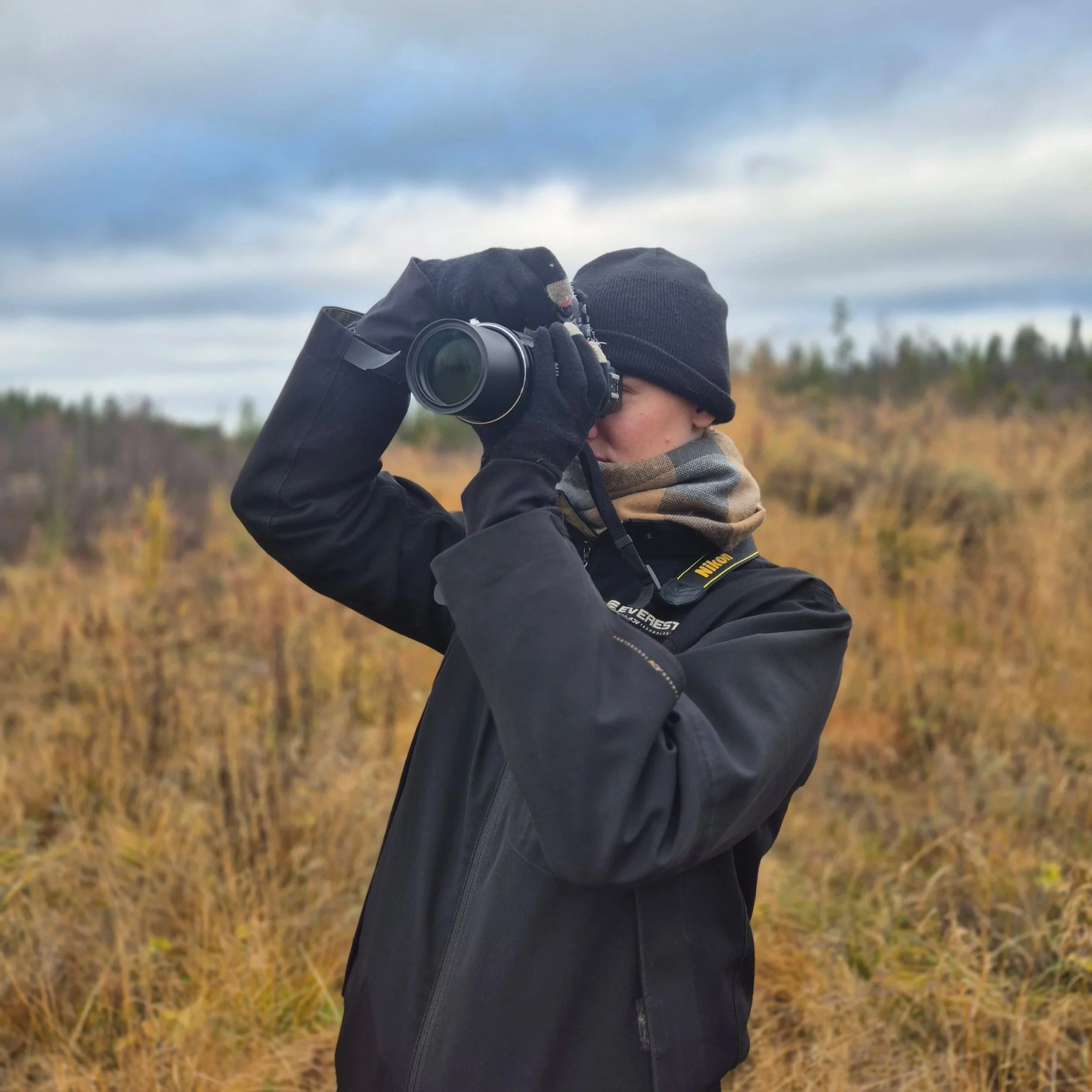
Postdoctoral Researcher Bea Andersson capturing the landscape throughout the trip.
Photograph: Michael Hawgood.